Thinking Labs are small discussion groups composed of IPA Members and Candidates. Participants meet online twice per month for three months (six meetings in total, each meeting is 90 minutes long) to discuss a specific topic. At the end of the three months, they may write a paper about their experience, which may be published on the IPA website. This semester, we are offering two groups in English and one group each in Portuguese and Spanish, all starting in September 2025.
FINAL REPORTS 2025
ENGLISH
- William Glover
Psychoanalysis in the Anthropocene
- Pam Shein
Working with the countertransference in child and adolescent psychoanalysis
SPANISH
- Juan Pablo Jiménez
Por qué nos interesa investigar en proceso psicoanalítico
(Why We Are Interested in Investigating the Psychoanalytic Process)
PORTUGUESE
- Leonardo Siqueira Araújo
O que é um homem? Cenários masculinos na psicanálise
(What is a man? Scenarios for masculinity in psychoanalysis)
The Group in Portuguese | Moderator: Leonardo Siqueira Araújo
Title: O que é um homem? Cenários masculinos na psicanálise
Introduction:
A proposta deste Laboratório é fomentar uma discussão em torno de como se constitui a masculinidade, sob um ponto de vista psicanalítico. Muito falamos em tornos das grandes mudanças nas questões de gênero ao longo dos últimos anos, mas isso traz a questão: o que é um homem? A partir disso, busca-se, principalmente, não apenas uma articulação sociológica mas também em termos da construção psíquica. Queremos debater que mecanismos internos fazem parte do que se chama masculinidade, de maneira a compreender melhor como se dá essa estrutura interna e como ela é alterada pela realidade sociocultural.
Bio:
 Leonardo Siqueira Araújo
Membro Associado da Sociedade Psicanalítica do Rio de Janeiro. Membro Associado da Sociedade Brasileira de Psicanálise de Minas Gerais. Editor da Revista Mineira de Psicanálise. Co-Editor da Revista Psicanalítica da SPRJ. Ex-Presidente da IPSO (2017-2019)
The Group in English | Moderator: William Glover
Title: Psychoanalysis in the Anthropocene
Introduction:
The Anthropocene announces a new geological epoch where Psychoanalysis must recognize that humanity is but one form of life on our changing planet. The concept extends beyond climate change to encompass the wide-ranging, pervasive, global impacts of human activity. Other species have affected evolution and geology, but we are the first to know it and able to make conscious choices about it.
This will be a didactic, experiential Thinking Lab where readings will spark discussion and personal reflections on the impact of climate change and how psychoanalysis can extend its ethos of care beyond self and other to the planet Earth.
We will discuss selected readings of Sally Weintrobe, Dipesh Chakrabarty, Kyle Powys Whyte, Bruno Latour, Paul Hoggett, and others.
Bio:
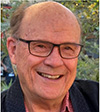 William Glover, Ph.D.
Bill is a Fellow of the IPA and a member of APsA and the San Francisco Center for Psychoanalysis where he is a Training and Supervising Analyst. He is a past President of the American Psychoanalytic Association and currently a representative on the IPA Board
The Group in Spanish | Moderator: Juan Pablo Jiménez
Title: Por qué nos interesa investigar en proceso psicoanalítico
Introduction:
Cualquier psicoanalista que se plantea una segunda mirada sobre un tratamiento en curso, sea en una autosupervisión o en una discusión entre pares, se enfrenta a la pregunta de si en el tratamiento en cuestión se está desplegando, o no, un proceso psicoanalítico. Todos hemos escuchado el juicio emitido, la mayoría de las veces como crítica, de “¡Esto no es psicoanálisis!” En todo caso, hay consenso en afirmar que el concepto de “proceso psicoanalítico” es un central de la clínica psicoanalítica. Pero ¿cuál es la historia de este concepto? ¿Qué podemos decir de él en la actualidad? Freud introdujo el concepto en 1913, sin embargo, nos encontramos con juicio como el de Abrams en 1987: “El proceso psicoanalítico conceptualiza lo que es fundamental para el potencial investigativo y clínico del psicoanálisis. Sin embargo, es difícil imaginar un término más cargado de ambigüedad, controversia y diversidad de uso. [...] Se ha convertido en una Babel, un shibboleth y un arma. ¿Vale la pena salvarlo?”
El objetivo de este seminario es revisitar la historia del concepto, lo que autores señeros de nuestra especialidad han señalado sobre él y volver a pensar la validez y los límites del concepto en la investigación clínica, conceptual y empírica en el psicoanálisis moderno.
Bio:
 Juan Pablo Jiménez
Nací en 1945 en San Bernardo, cerca de Santiago de Chile, en una familia de profesionales y académicos. Tras una breve formación en teología y filosofía en el seminario, estudié medicina y me especialicé en psiquiatría y psicoanálisis en la Universidad de Chile y la APCh.
Insatisfecho con una formación meramente clínica, realicé un doctorado en Alemania, centrado en investigación empírica del proceso psicoanalítico. A mi regreso a Chile en 1990, me dediqué a formar psicoterapeutas e investigadores, fundando programas como el de psicoterapia psicodinámica de Corporación Salvador y el Congreso Chileno de Psicoterapia.
Fui presidente de la APCh y de FEPAL, e impulsé la creación de APSAN. Participé en comités de la API y fui miembro fundador de la Casa de Delegados. En 2007 cofundé el doctorado en psicoterapia junto a universidades chilenas y la Universidad de Heidelberg. Entre 2019 y 2024 fui director de MIDAP, centro líder en investigación en salud mental en América Latina.
Formé a cientos de psiquiatras y psicólogos y dirigí durante una década el Departamento de Psiquiatría de la Universidad de Chile, donde hoy soy profesor emérito. Actualmente colaboro en un proyecto nacional sobre sostenibilidad social y salud mental. Mantengo una práctica privada como psicoanalista.
Más datos se pueden encontrar en mi ORCID: https://orcid.org/0000-0002-8679-6614
The Group in English | Moderator: Pam Shein
Title: Working with the countertransference in child and adolescent psychoanalysis
Introduction:
In this series of seminars, I am going to explore the complex interaction that occurs between analyst and analysand in our everyday clinical work with children and adolescents.
With Freud, transference was an expression of the repetition compulsion and the repetition of the past onto the analyst. Through her work with children Klein observed that analysis was about externalizing the internal situation made of internal objects and the identification processes that arose from them, onto the analyst.
This changed the view of the transference and opened new ways of seeing things that hadn’t been looked at. It paved the way for a new interest in countertransference as an instrument for psychoanalysis. Bion, Meltzer and others developed these ideas which we will discuss during the seminars.
We are all likely to all agree that countertransference is an emotional experience and is ever present in the psychoanalytic process.
In the series I would like to present three patients in which I want to discuss the role of the child analyst in the therapeutic encounter; the place of the child analyst in the transference; the counter transferential feelings that are aroused in the analyst, from within the analyst herself, from the projections of the analysand and from the transference to the setting and frame itself. The analyst may be the same person in all three cases but to each case, she is an object of the transference possessing different qualities, playing different roles and experiencing unique counter transferential affects.
Learning Objectives
From these seminars you will learn:
1. What is the countertransference, enactment, projective identification and projective counter-identification.
2. The receptivity to the countertransference in the therapeutic encounter with children and adolescents.
3. How to apply the countertransference to the specific challenges that working with children and adolescents bring.
4. How to work with parents and the countertransference to the parents.
Moderator Bio
 Pam Shein is a Child and Adult Training Analyst with the Australian Psychoanalytical Society. She is the Chair of the Child and Adolescent Standing Committee for the Australian Psychoanalytical Society. She is a member of COCAP- the Committee for Child and Adolescent Psychoanalysis for the IPA and is the COCAP representative of the Asia Pacific Region. She is a Visiting Professor and the Infant Observation Coordinator to the Psychotherapy Training Program in the Huazhong University of Science and Technology, Wuhan. She is in private practise in Sydney, working with adults, children, adolescents, parents and infant observation groups.