THINKING LABS - 6
Thinking Labs are small discussion groups for IPA Members and Candidates. Participants meet online twice a month for three months (six meetings in total; each meeting lasts 90 minutes) to discuss a specific topic. At the end of the three months, participants may write a paper about their experience. Selected papers may be published on the IPA website.
This semester (March–June 2026), two groups are offered: one in English and one in Spanish. Please see the detailed schedule below.
Moderators 2026
-
ENGLISH
Bharti Jain: Is Online Psychoanalysis a Different Modality? – Reflections on Frame, Symbolic Space, and Analytic Presence Online
- SPANISH
César Merea: Transformaciones en metapsicología y el concepto de psiquismo extenso (Transformations in Metapsychology and the Concept of an Extended Psyche)
The Group in English
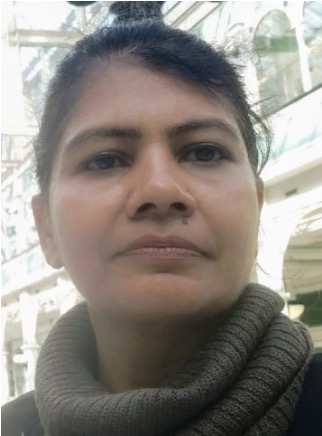
Moderator: Bharti Jain
 Language:
 English
Title: Is Online Psychoanalysis a Different Modality? -- Reflections on Frame, Symbolic Space, and Analytic Presence Online
Introduction to the theme
What happens to psychoanalysis when the physical consulting room disappears? Online practice, initially adopted under pressure, now confronts the discipline with a fundamental challenge to its identity. The loss of shared physical space unsettles assumptions about the analytic frame, presence, and containment, and has evoked anxieties about dilution, distortion, or even the survival of psychoanalysis itself.
Yet clinical experience suggests that meaningful analytic work does take place online and does not simply replicate in-person practice. Rather, it reorganises transference, countertransference, and symbolic exchange in unpredictable and sometimes creative ways. Drawing on clinical experience and emerging literature, this Thinking Lab explores whether online psychoanalysis constitutes a distinct modality with its own psychic conditions and risks. It asks how symbolic space, the analytic third, and processes of meaning-making are transformed when the traditional room is absent—and what it means to remain psychoanalytic when the frame itself is reconfigured.
The aim is to examine how psychoanalytic thinking and clinical practice are altered when analytic work moves online, and whether online psychoanalysis should be understood as a modification of analytic technique within an unchanged method, or as the emergence of a new clinical modality.
Description of the intended group format and participant engagement
This Thinking Lab is conceived as a dialogue-based, inclusive participatory space. A brief conceptual introduction will outline key questions and tensions surrounding online psychoanalytic work, followed by collective reflection. Prior familiarity with the theme is helpful but not required; curiosity and openness to clinical and emotional reflection are more important than prior theoretical positioning. Participants will be encouraged to reflect on their own experiences of online analytic work, including moments of difficulty, surprise, resistance, and discovery.
Discussion may tentatively focus on shared clinical questions such as:
- How do we understand the analytic frame when physical co-presence is absent?
- What becomes of the body, embodiment, and sensory presence when analytic work moves online?
- Do digitally mediated analytic encounters require the development of new clinical skills, forms of listening, or modes of analytic presence?
- In what ways might online work extend, challenge, or transform psychoanalytic practice?
The format is intended to create a safe and thoughtful space for exchange, where differing perspectives can coexist and enrich understanding. Emphasis will be placed on collective thinking rather than consensus, allowing participants to explore whether and how online psychoanalysis functions as a technical adaptation or as a distinct and evolving clinical modality.
Number of Participants
20
Dates and time of the meeting
(90 minutes per session, six sessions in total)
Saturday, March 14, 2026, 14:00–15:30 GMT/UTC
Saturday, April 11, 2026, 14:00–15:30 GMT/UTC
Saturday, April 18, 2026, 14:00–15:30 GMT/UTC
Saturday, May 16, 2026, 14:00–15:30 GMT/UTC
Saturday, May 23, 2026, 14:00–15:30 GMT/UTC
Saturday, May 30, 2026, 14:00–15:30 GMT/UTC
Moderator Bio:
Bharti Jain is a senior psychoanalyst with the IPA and a faculty member and seminar leader at the Indian Psychoanalytical Society. She works intensively across in-person and online analytic settings and has led survey-based research examining how digital mediation reshapes psychoanalytic work. Her clinical and theoretical interests centre on psychosis, phantasy, aggression, and primitive anxieties, particularly as these emerge when the analytic frame is destabilised. She is deeply engaged in training and supervision across cultural contexts and currently serves as an Asia Pacific Observer. Through papers, panels, and interactive workshops (including at IPA congresses/conferences), she explores how analytic presence, embodiment, and symbolic space are reconfigured when psychoanalysis moves beyond the consulting room.
El Grupo en español
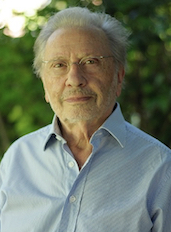
Moderador: César Merea
 Idioma:
 Español
Título: Transformaciones en metapsicología y el concepto de psiquismo extenso
Introducción al tema
El origen traumático del psiquismo, como lejanísimo eco del Big Bang, por ser su energía constitutiva. Por lo tanto, origen material del psiquismo, que luego será imaginario-simbólico.
La trilogía cerebro-mente-psiquismo, elementos inextricablemente unidos en la expresión del humano, con diferentes orígenes y funciones. Mente y psiquismo no son sinónimos.
La idea de un psiquismo extenso, con carácter de sustantivo, no como adjetivo, por funcionar en el espacio “entre”, de los sujetos y las cosas.
La extensión de las tópicas freudianas a una 3ª y una 4ª tópica, que seguramente se verán afectadas / transformadas por la tecnología, obligando a encarar una 5ª tópica, que incluya a las anteriores.
La heteronimia del yo, compuesto por diversas personas psíquicas.
A partir de allí se señala la existencia de un protonarcisismo de la sustancia orgánica, que actúa como defensa frente a la desintegración y crea un modelo de funcionamiento en el narcisismo del sujeto. Pasaje de la intersubjetividad a la interobjetividad.
Descripción del formato previsto para el grupo y la participación de los participantes
El grupo estará dirigido a personas interesadas en el tema. El funcionamiento del grupo se organizará colectivamente durante el primer encuentro, pudiendo incluir una breve introducción de mi parte y el intercambio de reflexiones entre los participantes.
Límite de participantes
20
Fecha y hora de las reuniones
(90 minutos por sesión, seis sesiones en total)
Martes 7 de abril de 2026, 11:30-13:00 (hora de Buenos Aires, UTC−3 / 14:30-16:00 UTC)
Martes 21 de abril de 2026, 11:30-13:00 (hora de Buenos Aires, UTC−3 / 14:30-16:00 UTC)
Martes 5 de mayo de 2026, 11:30-13:00 (hora de Buenos Aires, UTC−3 / 14:30-16:00 UTC)
Martes 19 de mayo de 2026, 11:30-13:00 (hora de Buenos Aires, UTC−3 / 14:30-16:00 UTC)
Martes 2 de junio de 2026, 11:30-13:00 (hora de Buenos Aires, UTC−3 / 14:30-16:00 UTC)
Martes 16 de junio de 2026, 11:30-13:00 (hora de Buenos Aires, UTC−3 / 14:30-16:00 UTC)
Biografía del moderador:
E. César Merea es médico por la Universidad de Buenos Aires (U.B.A.). Miembro titular y didáctico de la Asociación Psicoanalítica Argentina, de la cual ha sido secretario científico y profesor del Instituto de Psicoanálisis. Es ex-Profesor de Salud Mental y Psiquiatría de la Facultad de Medicina (U.B.A.) Autor de varios libros, incluyendo:
La extensión del psicoanálisis (1994),
Parejas y Familias (2003),
La transformación del psicoanálisis (2013),
La enfermedad, complejidad y psiquismo extenso (2020).